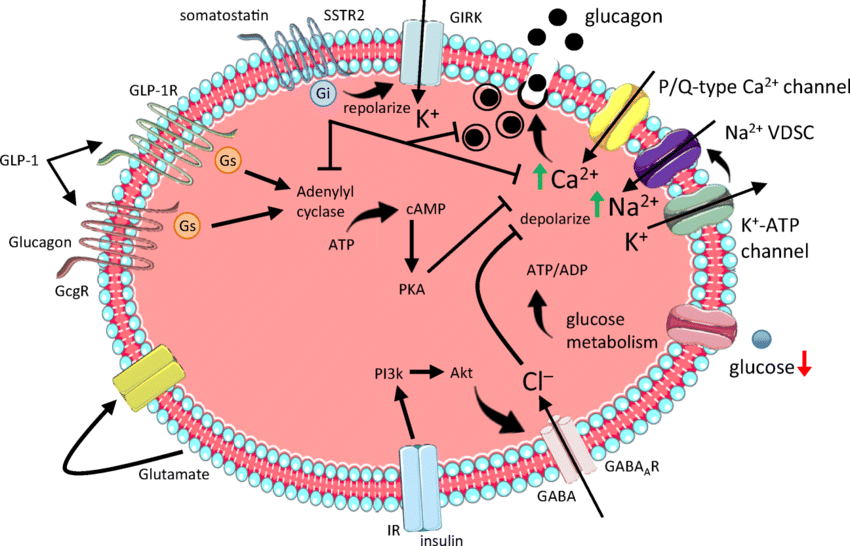
Tuit Nutrition A New Look at Insulin Glucagon the Pancreas aka Biology Diagrams Metabolic homeostasis in mammals is tightly regulated by the complementary actions of insulin and glucagon. The secretion of these hormones from pancreatic β-cells and α-cells, respectively, is

The pancreatic islets of Langerhans are central to fine-tuning metabolism to ensure metabolic homeostasis during the transition between fasting and feeding. Insulin and glucagon, the principal

Pancreatic regulation of glucose homeostasis Biology Diagrams
As mentioned above, pancreatic glucagon's metabolic functions are in many respects opposite to those of insulin. Glucagon's most prominent physiological role is to stimulate glucose production via hepatic glycogenenolysis or gluconeogensis, thereby helping maintain euglycemia during states of rapid glucose utilization or fasts, respectively.

Abstract. Insulin is a polypeptide hormone mainly secreted by β cells in the islets of Langerhans of the pancreas. The hormone potentially coordinates with glucagon to modulate blood glucose levels; insulin acts via an anabolic pathway, while glucagon performs catabolic functions. Through its various hormones, particularly glucagon and insulin, the pancreas maintains blood glucose levels within a very narrow range of 4-6 m M. This preservation is accomplished by the
Neuronal glucose sensing mechanisms and circuits in the control of ... Biology Diagrams
Glucagon increases blood glucose levels, whereas insulin decreases them. 5 Somatostatin inhibits both, glucagon and insulin release, 6 whereas PP regulates the exocrine and endocrine secretion activity of the pancreas. 3, 7 Altogether, these hormones regulate glucose homeostasis in vertebrates, as described in more detail below. Although the Together, insulin and glucagon help maintain homeostasis, where conditions inside the body hold steady. When a person's blood sugar is too high, their pancreas secretes more insulin. When their This review focuses upon the role of hormones secreted by the endocrine pancreas: hormones, which individually and collectively influence food intake, with an emphasis upon insulin, glucagon and amylin. Insulin and amylin are co-secreted by B-cells and provide a signal that reflects both circulating energy in the form of glucose and stored