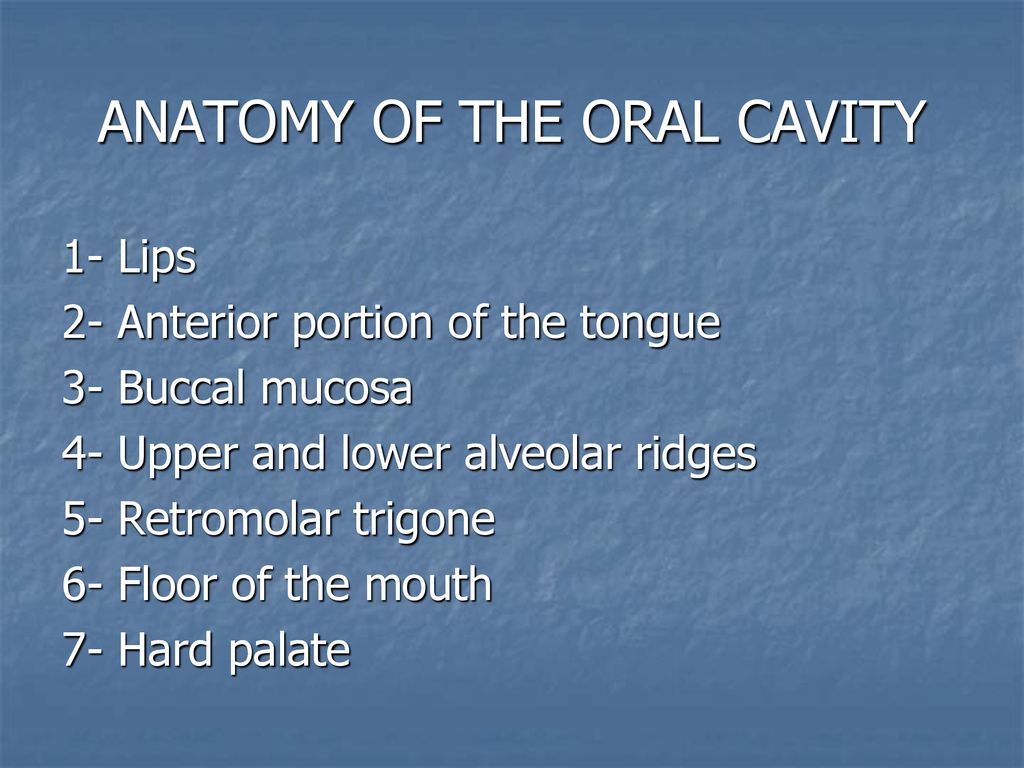
SOLUTION Anatomy Oral Cavity Biology Diagrams Moving further inside is the oral cavity proper, bounded by the dental arches anteriorly and laterally, and the palate superiorly. The oral cavity proper is mainly occupied by the tongue. Now let's get back to that slice of pizza. To eat it, first you open your mouth, and the opening through which the food enters is called the oral fissure.

Anatomy of the mouth. Floor of the mouth with lingual frenum and sublingual fold. The mouth consists of two regions: the vestibule and the oral cavity proper. The vestibule is the area between the teeth, lips and cheeks. [3] The oral cavity is bounded at the sides and in front by the alveolar process (containing the teeth) and at the back by the isthmus of the fauces.
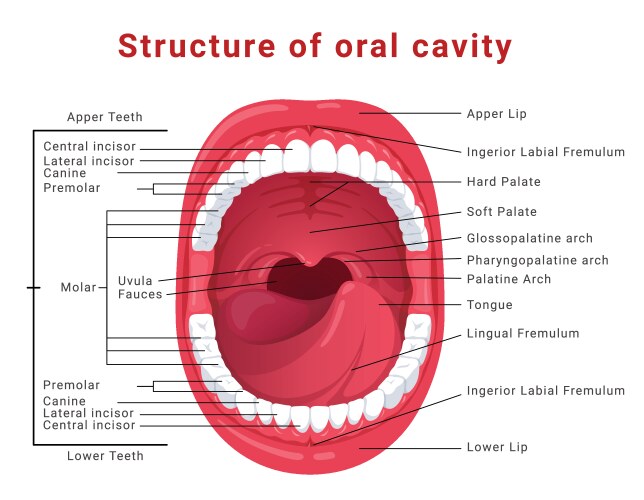
Oral Cavity, Pharynx, and Esophagus Biology Diagrams
The borders of the oral cavity are the: cheeks or buccal surface (Latin, bucca, "cheek") - forming the sides; hard and soft palates - forming the "roof" tongue or lingual surface (Latin: lingua, "tongue") - forming the "floor."; There are four shapes of teeth. These shapes are the basis for the full names of the teeth:

This e-Anatomy module contains 114 illustrations on the oral cavity, the mouth, the tongue and the salivary glands. These fully annotated anatomical illustrations are presented as a comprehensive atlas of the oral cavity, specially designed for medical students, medicine residents and healthcare professionals. Material and methods

Oral Cavity Definition, Anatomy, Functions, Diagram Biology Diagrams
The oral cavity, better known as the mouth, is the start of the alimentary canal. It has three major functions: Digestion - receives food, preparing it for digestion in the stomach and small intestine.; Communication - modifies the sound produced in the larynx to create a range of sounds.; Breathing - acts as an air inlet in addition to the nasal cavity.